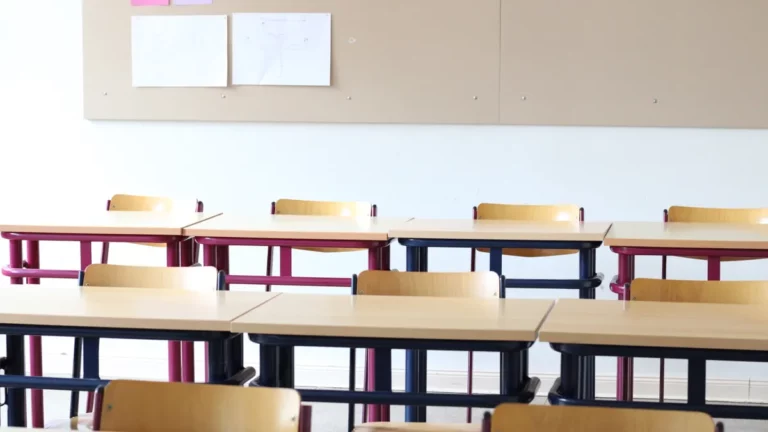
The short answer: treat classroom devices as a planned school asset, not a pile of boxes. Keep a clear list of every laptop, tablet and interactive board. Set devices up the same way before they reach a classroom. Keep software updated and limit who can change settings. Have a named person or support partner to call when something fails during a lesson. When you retire a device, wipe or destroy its drive so pupil and staff data doesn’t leave with it.
This guide is for principals, deputy principals, ICT co-ordinators and boards of management. The audience is primary and secondary schools in Meath, Cavan, Westmeath, Louth and Dublin. The guide covers how to manage and secure classroom devices day to day. Microsoft 365 backup isn’t covered in detail, which is a separate topic.
Why classroom devices need a plan
Most Irish schools now rely on laptops, tablets and classroom displays for teaching. The Department of Education’s Digital Strategy for Schools to 2027 aims to help every learner build the digital skills they need. It sets high-level objectives under three pillars. That ambition only works if the devices in each room start, stay updated and stay under the school’s control.
Oide Technology in Education says fit-for-purpose devices for teachers and students are critical. Student devices should be Wi-Fi enabled, mobile, sturdy and long-lasting on battery. Its computing devices guide also notes that a consistent, school-managed set of devices supports stronger cybersecurity through central device management. Unmanaged personal devices are harder to keep safe.
Schools also hold personal data about pupils, parents and staff. The Data Protection Commission’s Data Protection Toolkit for Schools treats schools as data controllers and focuses on children’s personal data. Under the GDPR, organisations must put security in place that is appropriate to the risk (Article 32). How you manage classroom devices is part of that picture.
Start with a clear inventory
You can’t manage what you can’t name. For each laptop, tablet, desktop and interactive board, record:
- Where it usually sits, such as Room 4 or the SET room.
- Who owns it day to day, or whether it sits in a shared trolley.
- The make, model and serial number.
- When it was bought and when you expect to replace it.
- Whether it is under warranty or covered by insurance.
Update the list when a device moves room, breaks or leaves service. A shared spreadsheet works well to start. The point is that the principal, ICT co-ordinator and your IT support can all see the same picture.
Set classroom devices up the same way
A new laptop that arrives in a box and is set up differently in each classroom creates extra work later. A consistent setup usually covers:
- The school’s standard user accounts and sign-in rules.
- The apps and classroom tools teachers actually need.
- Security software, automatic updates and a screen lock.
- Rules that stop pupils from installing random software where that isn’t wanted.
- A way to find, lock or wipe a missing school device, where your platform supports it.
Central device management is the general name for tools that enrol school-owned devices. Those tools push the same settings to all of them. You don’t need to pick a brand here. What matters is that staff devices and pupil devices follow a school policy. A leavers process should remove access when a teacher, SNA or substitute finishes.
The National Cyber Security Centre’s quick guide for schools asks schools to manage and limit user privileges. It also covers strong unique passwords, multi-factor authentication where possible, anti-virus on school devices, and regular patches and software updates.
Keep interactive boards and displays under control
Interactive boards and classroom displays are classroom devices too. They often stay powered on, connect to the school network and receive updates of their own. Agree who keeps their software current, who holds the admin password, and what happens if the board fails mid-lesson. If a teacher’s laptop is the only way to drive the board, have a spare cable or a known backup laptop nearby.
Oide Technology in Education publishes guidance on presenting in the classroom, including an interactive flat panel framework for schools. Use that kind of guidance when you plan a purchase. Then write installation and aftercare into the same plan as your laptops and tablets.
Who fixes a failed laptop or board when a lesson is about to start?
In many schools, IT still falls to the principal, the school secretary or a teacher with a few free periods. Decide in advance:
- Who teachers contact first when a laptop or board fails.
- What can wait until the next free period, and what needs same-day help.
- Who keeps spare chargers, a loan laptop and basic display cables.
- How substitutes get a working account without sharing someone else’s password.
Network problems can look like device problems. Cabling and Wi-Fi that cover classrooms and offices matter as much as the laptop itself. Monitoring the network helps you spot failures before a whole wing of rooms loses access.
Retire old kit safely
Old staff laptops and pupil devices often still hold files, browser profiles and saved passwords. Before a device leaves the building for reuse, recycling or scrap, remove the drive, wipe it and, where appropriate, physically destroy it. Keep a short record of each retirement and its date. That protects pupil and staff data and closes the loop on your inventory.
Hypothetical example
A mixed primary school near Trim has three shared laptop trolleys, staff laptops and interactive boards in most rooms. Nobody is sure which trolley laptop is missing a charger, and two boards still use a shared PIN from 2021. The school builds a simple inventory and enrols school-owned devices into one management approach. It sets a standard staff image and gives the ICT co-ordinator a named support contact for same-day classroom faults. Retired laptops have their drives wiped and destroyed before they leave the store room.
How Sweeney Computer Services can help with classroom devices
Oliver Sweeney founded the company in 1985. Today we support more than 50 businesses and more than 10 schools from Hurdlestown, Kells, Co. Meath. We supply and install computers, laptops, monitors, interactive boards and projectors. Devices can be set up with your security, monitoring and software before they reach the classroom. We also do network installs and cabling with our own team, and we monitor networks so we can pick up problems quickly.
When you retire devices, we remove the hard drives, wipe them and then physically destroy them. We look after the PCs, network and accounts your school administration software relies on. We work with software vendors and classroom technology suppliers when something needs their input. See our IT support for schools, our hardware and procurement services, our Wi-Fi and networking services and our cybersecurity services. Our backup and disaster recovery page covers what happens if systems or files fail.
If Microsoft 365 is part of your school setup, we bill licences separately from support. Our helpdesk runs Monday to Friday, 9am to 5:30pm, and after-hours emergency support costs extra.
A quick sense-check
Is every room set up the same way?
Book a short call with Michael Sweeney to talk through inventories, standard setups, interactive boards and day-to-day support for your school.